
Material handling equipment faces repeated contact, moisture, chemicals, and daily wear. For manufacturers, the finish must protect exposed metal while meeting appearance, assembly, and performance requirements. Choosing the right material handling equipment coating starts with understanding where each component will operate and what it must withstand.
Rhinehart Finishing provides contract finishing services for OEMs and industrial manufacturers. Our capabilities include mechanical cleaning, zinc phosphate pretreatment, powder coating, liquid spray painting, custom masking, and quality testing. We help customers coordinate these services around their component specifications and production needs.
From fabricated frames to guards and housings, our team evaluates the details that affect finish quality. We bring coating application and supporting operations together to help manufacturers simplify supplier coordination.
Coating Solutions for Material Handling Equipment
The right coating depends on the substrate, operating environment, component geometry, and required finish. Indoor warehouse equipment may face different conditions than outdoor lifting equipment or machinery exposed to chemical spills. We review those requirements to help determine a suitable finishing approach.
Powder Coating for Handling Equipment
Powder coating for material handling equipment provides a durable protective finish for compatible metal components. Depending on the formulation and preparation, it can offer resistance to corrosion, chipping, abrasion, and routine handling. Fabricated steel frames, guards, brackets, and housings are potential candidates.
Our powder coating services support manufacturers seeking consistent finishes across production parts. Color, gloss, and texture requirements help guide selection, along with the component’s exposure and ability to withstand curing temperatures.
Liquid Spray Coatings for Equipment Components
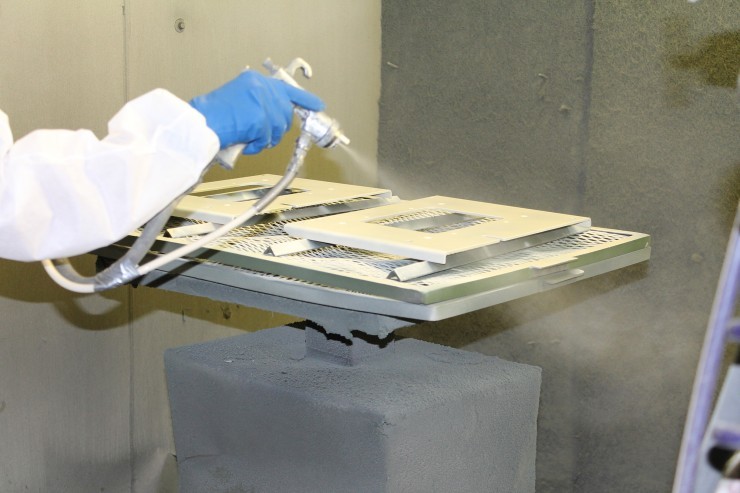
Liquid spray painting offers another option for parts requiring specified primers, topcoats, or specialized industrial paint systems. It may suit components whose finish requirements or configuration favor a liquid process. Coverage, film thickness, masking, and curing must be planned around the individual part.
Rhinehart Finishing operates flatline and overhead liquid painting systems. Our flatline process accommodates smaller components and intricate masking requirements, while our overhead system integrates pretreatment with coating operations. We review part dimensions and handling needs before confirming project feasibility.
Zinc Phosphate Pretreatment
Coating performance begins with the underlying surface. Oil, rust, scale, and other contaminants can interfere with adhesion, making cleaning and preparation essential steps. We use manual and automated blasting methods according to the substrate and project requirements.
Our mechanical cleaning and pretreatment services include zinc phosphate treatment. This conversion coating supports paint and powder adhesion and contributes to corrosion resistance as part of the complete finishing system. Preparation methods are selected for the component and governing specification.
Military Coatings for Applicable Programs
For defense-related material handling components, the specified finish may include Chemical Agent Resistant Coating, or CARC. Rhinehart Finishing offers CARC application capabilities and lists TACOM approvals for zinc phosphate and combat-grade powder coating. Provide the governing specification so we can review the required process and acceptance criteria before quoting.
What to Consider When Selecting Equipment Coatings
Start with the conditions the finished component will face. Identify moisture, sunlight, cleaning chemicals, oils, impacts, and abrasive contact. A finish suitable for an indoor cart frame may require a different formulation than lifting equipment coatings exposed to outdoor weather.
Part dimensions, weight, geometry, and substrate also affect preparation, racking, application, and curing. Threads, bearing seats, mounting surfaces, and electrical contact areas may require masking. Drawings should identify these features and any critical dimensional requirements.
Include color references, gloss expectations, coating thickness, and required tests in the project specifications. Rhinehart Finishing’s ISO 9001:2015 quality management system provides a framework for consistent processes. Product-specific compliance still depends on the applicable coating requirements and agreed inspection criteria.
From Fabrication to Finished Components
Coordinating several suppliers can add handling, transportation, and scheduling work. Rhinehart Finishing combines complementary operations to help manufacturers move components through finishing with fewer outside handoffs. Our sister facility, Rhinehart Development, also offers fabrication, stamping, and welding next door.
Preparation, Masking, and Application
For projects involving both facilities, fabrication and finishing requirements can be coordinated early. Surface condition, weld areas, masking locations, and handling points all deserve attention before coating begins. Early review helps identify requirements that could otherwise create rework later.
After preparation, components receive the specified powder or liquid coating system. Application and curing follow the selected material’s requirements. Our detailing capabilities include custom die-cut masking, stenciling, silk screening, and assembly operations according to customer specifications.
Inspection, Packaging, and Delivery
Our in-house testing capabilities include salt spray, impact, scratch, mandrel bend, and phosphate coating weight testing. These methods help evaluate different aspects of coating performance. The appropriate tests and inspection requirements depend on the project specification.
We also provide packaging, kitting, and transportation coordination. For recurring OEM powder coating services, discuss batch quantities, handling requirements, and delivery schedules during quoting. Planning these details together helps align finishing operations with your production program.
Applications Across the Material Handling Industry
Conveyor equipment coating requirements vary by component. Frames, supports, and guards may need corrosion protection and a consistent appearance. Chutes and hoppers exposed to direct material flow require separate evaluation because concentrated abrasion can demand specialized wear protection.
Forklift guards, hoist housings, cart frames, and loading equipment components are other potential applications. Exposed metal may face moisture, repeated handling, oils, and impacts. Coating suitability depends on the substrate, part dimensions, assembly requirements, and expected service conditions.
Material handling components used in agricultural, construction, aerospace, or defense programs may have additional requirements. Share relevant OEM specifications, environmental exposures, and testing criteria. Our team can review the finishing scope against those needs.
Frequently Asked Questions About Material Handling Equipment Coating
Should Manufacturers Choose Powder Coating or Liquid Paint?
Both can provide effective protection when properly specified and applied. Powder coating is a strong option for compatible metal components that tolerate its curing process. Liquid paint may fit particular primer and topcoat specifications or application needs. Selection should account for geometry, exposure, appearance, and production requirements.
Can Heavy Equipment Parts Be Powder Coated?
Many metal equipment components are suitable for powder coating. Feasibility depends on dimensions, weight, geometry, substrate, and curing requirements. Components containing heat-sensitive materials or assembled mechanisms need additional review. Send drawings and part details so Rhinehart Finishing can evaluate the proposed work.
What Information Is Needed for a Coating Quote?
Provide drawings, substrate, dimensions, weight, quantities, and expected production volumes. Include coating specifications, color and gloss requirements, masking details, testing criteria, and service conditions. Packaging instructions and delivery schedules also help define the project scope and support an accurate quotation.
Plan Your Handling Equipment Coating Project
Rhinehart Finishing brings preparation, coating, testing, and supporting services together for industrial manufacturers. We work with customers to review component requirements and coordinate finishing with production needs. Share your drawings, specifications, and volumes, then request a quote to discuss your material handling equipment coating project.